
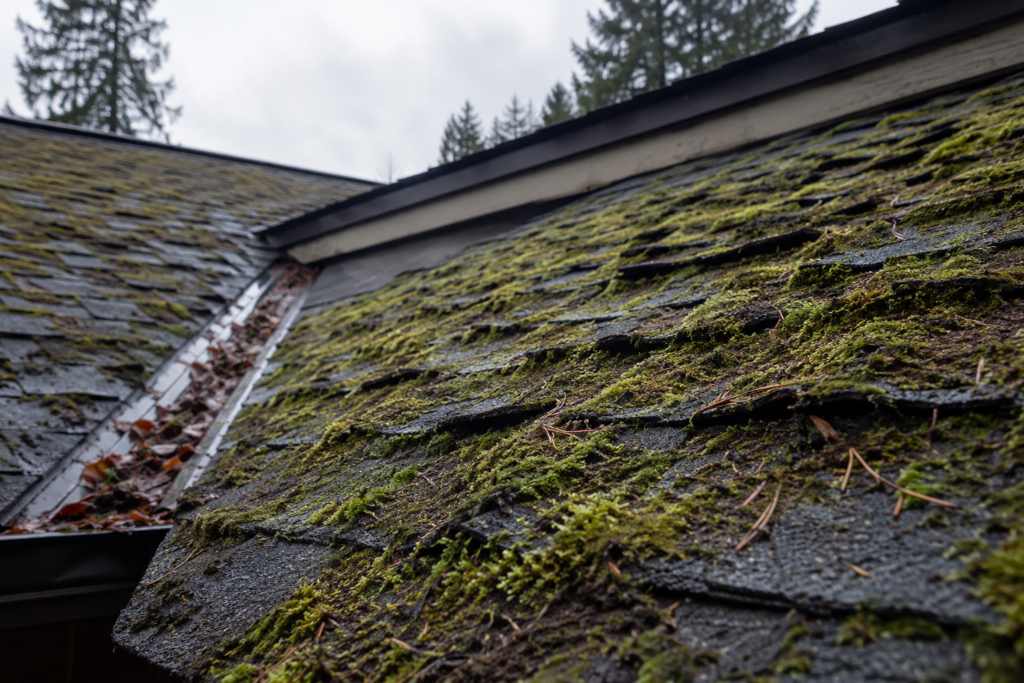
If you’ve noticed a green or dark layer growing across sections of your roof, don’t dismiss it as a cosmetic issue. Roof moss is one of the most underestimated causes of water damage in Spokane homes – and by the time most homeowners take it seriously, it has already done significant structural harm.
Unlike a burst pipe or a sudden roof failure, moss works slowly and silently. It grows season after season, trapping moisture against your shingles, lifting their edges, and creating pathways for water to seep into your roof deck, attic, and walls. Spokane’s combination of wet winters, shaded rooftops, and seasonal humidity makes it one of the most moss-prone environments in the Pacific Northwest.
This guide explains exactly how roof moss causes water damage, what warning signs to look for, and what steps Spokane homeowners need to take – both to remove existing moss and to address any water damage it may have already caused inside the home.
Why Spokane Roofs Are So Vulnerable to Moss Growth
Moss doesn’t grow randomly – it thrives in specific conditions, and Spokane provides all of them:
- Shade from trees and structures: North-facing roof sections and areas shaded by large trees stay damp longer after rain or snow, creating the perfect environment for moss spores to take hold.
- Seasonal moisture: Spokane’s wet fall and winter seasons keep roofs damp for extended periods, giving moss the consistent moisture it needs to establish and spread.
- Organic debris accumulation: Leaves, pine needles, and dirt that collect on rooftops hold moisture against shingles and provide nutrients that accelerate moss growth.
- Aging roofing materials: Older shingles lose their protective granule coating over time, making them far more hospitable to moss, algae, and lichen growth.
- Temperature fluctuations: Spokane’s freeze-thaw cycles create micro-cracks in roofing materials that give moss roots a foothold they can exploit to expand deeper into the shingle surface.
How Moss Destroys Your Roof and Causes Water Damage
This is the part most homeowners don’t fully understand. Moss doesn’t just sit on top of your roof – it actively damages it through several mechanisms:
- Moisture retention: Moss acts like a sponge, absorbing and holding water against your shingles long after rain has stopped. This continuous moisture exposure accelerates shingle deterioration far beyond normal weathering.
- Shingle lifting: As moss grows thicker, its root-like structures called rhizoids penetrate between shingles and physically lift their edges. Lifted shingles allow wind-driven rain and snowmelt to flow directly under the roofing surface.
- Roof deck saturation: Once water gets under lifted shingles, it reaches the wooden roof deck below. Saturated roof decking rots, loses structural integrity, and eventually requires full replacement.
- Granule loss: Moss growth accelerates the loss of protective granules from asphalt shingles. Without granules, shingles have no UV protection and deteriorate rapidly.
- Blocked drainage: Thick moss growth can block water flow toward gutters, causing water to pool on the roof surface and back up under shingles along the eaves.
Once water penetrates your roof deck, it doesn’t stop there. It travels into attic insulation, runs along ceiling joists, soaks into wall framing, and spreads far beyond the original entry point – causing damage that is invisible from outside the home.
6 Warning Signs Moss Has Already Caused Water Damage in Your Spokane Home
- Green or dark patches on the roof surface: Visible moss, algae, or lichen growth – particularly on north-facing sections or shaded areas – is the first and most obvious sign.
- Lifted or curling shingle edges: Shingles that are no longer lying flat against the roof surface have likely been physically lifted by moss root growth underneath.
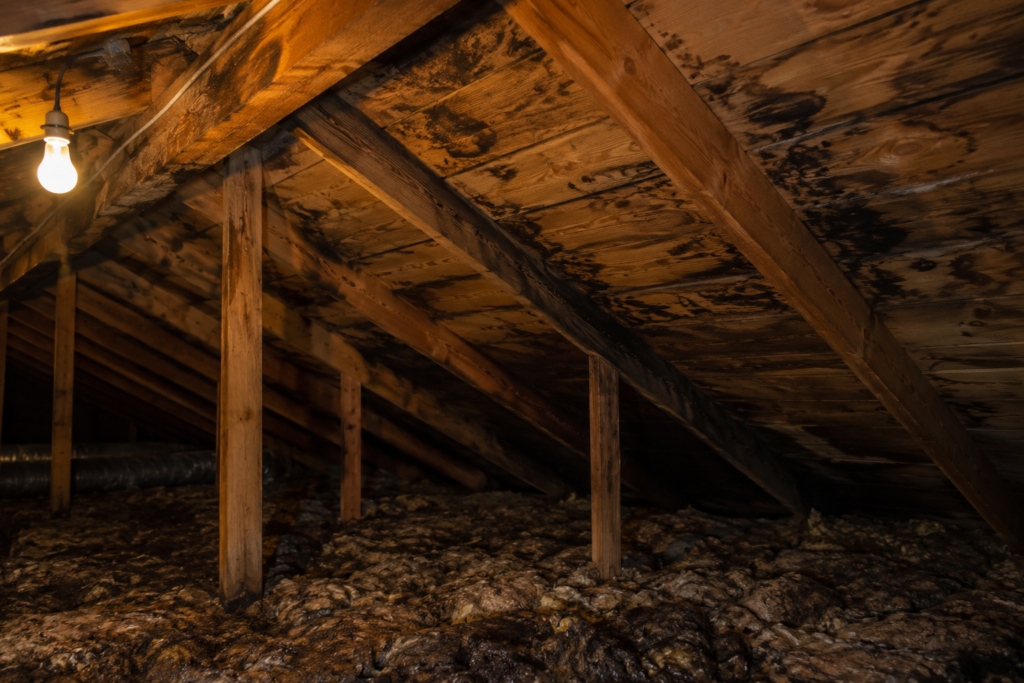
- Water stains on attic ceiling or rafters: Dark staining on wooden attic structures indicates water has been penetrating through the roof deck for some time.
- Musty smell in upper rooms or attic: A persistent damp odor in your attic or top-floor rooms is a strong indicator of hidden moisture trapped by roof water intrusion.
- Bubbling or peeling interior paint near roofline: Paint blistering on ceilings or upper walls near the roofline is almost always caused by moisture migrating down from above.
- Sagging gutters full of debris: Gutters weighed down by moss, granules, and organic material are a sign that your roof drainage system is compromised and water is likely backing up under the eaves.
Immediate Steps to Take If You Discover Roof Moss Damage
- Do not pressure wash the roof yourself: High-pressure washing removes moss but also strips protective granules from shingles, causing significant additional damage. Always use professional low-pressure or soft-wash methods.
- Clear gutters and downspouts first: Removing blockages restores proper drainage and reduces the risk of water backing up under the roofline while moss treatment is underway.
- Inspect your attic for moisture: Use a flashlight to check attic insulation, rafters, and the underside of the roof deck for water staining, soft spots, or visible mold growth.
- Document any interior water stains: Photograph ceiling stains, peeling paint, or any other signs of interior water damage before treatment begins – this documentation supports insurance claims.
- Call a professional moss removal company: Safe, effective moss removal requires the right treatments applied correctly. Moss removal Spokane to understand what professional moss removal involves and schedule a roof assessment.
- Call a water damage restoration team if moisture is found: If your attic inspection reveals water staining, wet insulation, or any sign of interior moisture, the damage needs professional assessment and drying – not just roof treatment.
The Moss Is Gone – But Is the Water Damage?
Here is the critical point that most Spokane homeowners miss. Professional moss removal stops the source of moisture intrusion – but it does nothing about the water that already entered your home during the time moss was present.
Wet attic insulation, damp roof decking, and moisture-saturated wall cavities do not dry out naturally within a safe timeframe. Without professional drying equipment, these materials stay wet long enough for mold to establish – and according to the U.S. Environmental Protection Agency (EPA), mold begins growing on wet building materials within just 24 to 48 hours of water exposure.
This means that even if moss has been on your roof for only one season, the moisture it allowed in may have already triggered mold growth inside your attic or walls. A professional water damage assessment after moss removal is not an overreaction – it’s a necessary step to confirm your home is actually dry and safe.
The team at Spokane WA Water Damage provides complete moisture mapping using thermal imaging cameras and professional moisture meters – identifying every area of hidden dampness that moss-related water intrusion may have caused. They handle full restoration from water extraction and structural drying through mold prevention treatment and finished repairs.
Professional Moss Removal vs. DIY – What Spokane Homeowners Need to Know
Many homeowners attempt to remove roof moss themselves using store-bought treatments or pressure washers. Here’s why professional removal is always the safer choice:
- Soft-wash application: Professional moss removal uses low-pressure application of specially formulated treatments that kill moss at the root without damaging shingles or stripping granules.
- Safe roof access: Walking on a moss-covered roof is extremely dangerous. Professionals have the equipment and training to work safely at height.
- Preventive treatment: After removal, professionals apply treatments that inhibit future moss regrowth – something DIY products rarely achieve long-term.
- Full roof inspection: A professional moss removal visit includes a complete roof inspection that identifies other damage points – cracked flashing, lifted shingles, damaged valleys – that may also be allowing water intrusion.
For Spokane homeowners looking for safe, effective moss removal with a full roof inspection included, contact roof cleaning Spokane to learn more about what the process involves.
Preventing Moss From Coming Back
Once moss is professionally removed, these steps will keep it from returning:
- Install zinc or copper strips near the ridge: Rainwater running over these metal strips releases ions that naturally inhibit moss and algae growth across the entire roof surface below.
- Trim overhanging tree branches: Reducing shade on your roof surface is one of the most effective long-term moss prevention strategies available to Spokane homeowners.
- Keep gutters clean year-round: Regular gutter cleaning removes the organic debris that feeds moss growth and ensures proper water drainage away from the roofline.
- Schedule annual roof inspections: Catching early moss growth before it establishes saves significantly on both removal costs and any associated water damage.
- Apply preventive treatments every 1-2 years: Professional-grade moss inhibitor treatments reapplied regularly keep spores from gaining a foothold on your roofing surface.
Final Thoughts
Roof moss in Spokane is far more than an aesthetic problem. Left untreated, it silently destroys your shingles, saturates your roof deck, and allows water to penetrate deep into your home’s structure – causing mold, rot, and damage that compounds every season it goes unaddressed.
The solution requires two things: professional moss removal to stop the source, and a professional water damage assessment to address everything the moss already allowed in. Skipping the second step means leaving hidden moisture in your home that will cause far more expensive problems down the road.
Spokane’s local water damage specialists are available 24 hours a day – ready to confirm your home is fully dry and safe after moss removal.
Call (509) 241-9024 for a free quote today.
Leave a Reply